Category: Blog

Your blog category

  • Why Liminal Became Liminal EXP: A New Era of Immersive Experiences

    Why Liminal Became Liminal EXP: A New Era of Immersive Experiences

    For years, we operated under the name Liminal.

    People loved the work.
    They remembered the experiences.
    But many did not fully understand what the word “Liminal” meant.

    So we made a decision.

    Not to reinvent what we do, but to clarify it.

    That clarity is now called Liminal EXP.


    What “Liminal” Really Means

    The word liminal refers to a threshold, a space between what was and what could be.

    It describes a moment suspended between the present and possibility.

    That is exactly where we operate.

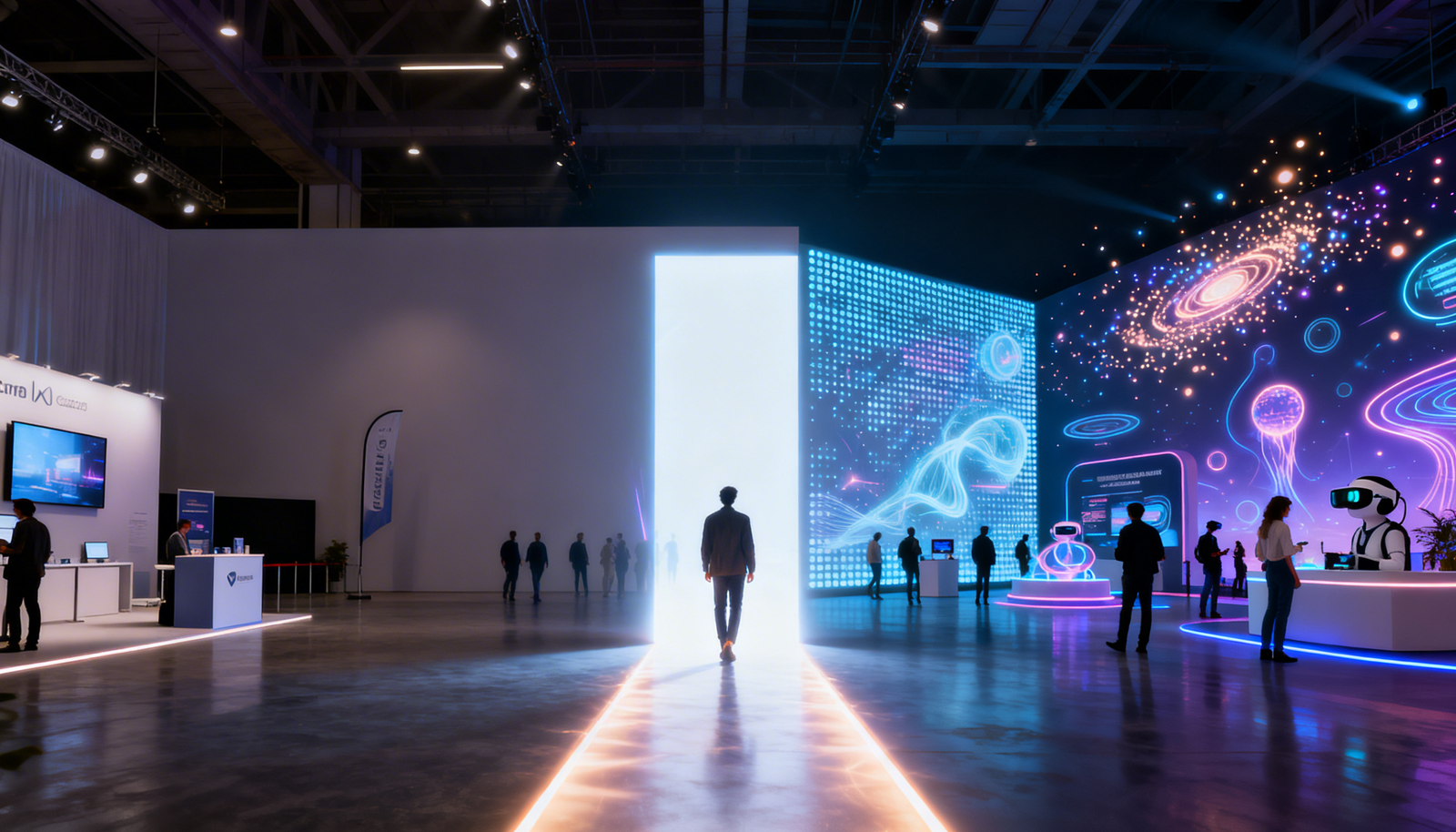
    We design immersive experiences that move people from passive observation into active participation.

    From watching to feeling.
    From browsing to engaging.

    Our work creates environments where audiences cross that threshold.

    Over time we realized something important.

    The concept was powerful, but the meaning was not obvious.


    From Concept to Commitment

    Liminal has always been about transformation.

    Now Liminal EXP makes that transformation clear.

    EXP stands for Experience.

    Because experience is what we build.

    Not just technology.
    Not just event activations.
    Not just installations.

    We build immersive experiences designed for real impact.

    Experiences that capture attention, drive participation, and leave lasting impressions.


    Why Experience Design Matters More Than Ever

    The event marketing and experiential industry has changed.

    Event companies face growing pressure to:

    • Increase event footfall
    • Extend dwell time
    • Deliver measurable engagement
    • Demonstrate ROI beyond visual appeal

    Brands are facing challenges as well.

    They need to:

    • Break away from repetitive marketing formats
    • Stand out in crowded experiential environments
    • Use immersive technology strategically instead of superficially

    The problem is not creativity.

    The real gap is experience design that performs.

    This is the space where Liminal EXP operates.


    What Liminal EXP Represents

    Liminal EXP is built around a simple belief.

    Experiences should perform, not just impress.

    We design engagement-driven experiential environments that combine storytelling, technology, and participation.

    Our work focuses on four key ideas.

    Engagement Systems, Not One-Off Spectacles

    Instead of temporary attractions, we create interactive systems that encourage ongoing participation.

    Immersion With Measurable Outcomes

    Every experience is designed to generate trackable engagement, audience interaction, and shareable content.

    Technology With Narrative Purpose

    Technology is used to support the story and the experience.

    It is never used simply for spectacle.

    Experiences That Command Attention

    In crowded environments, attention is one of the most valuable resources.

    Our experiences are designed to draw audiences in and keep them engaged.


    How Liminal EXP Helps Event Companies and Brands

    For Event Companies

    We transform static venues into high-engagement environments.

    Spaces become engagement engines that increase:

    • Visitor interaction
    • Content creation
    • Crowd retention
    • Event value

    For Brands

    We create immersive brand experiences that redefine presence.

    Instead of static displays, brands become interactive moments that audiences remember and share.


    A Clearer Future for Experiential Marketing

    This rebrand is not a reinvention.

    It is a sharpening of purpose.

    Liminal has always built experiences in the space between the present and what comes next.

    Now the name reflects the outcome we deliver.

    Experience. Elevated. Measured. Remembered.

    Welcome to Liminal EXP.


    Build a Share-First Experience for Your Next Event

    Today’s most powerful event moments do not stay on the event floor.

    They travel online through the content people create.

    At Liminal EXP, we design crowd-pulling immersive interactions that feel effortless on-site and naturally spread across social media.

    Because the best experiences do not only engage audiences.

    They turn audiences into storytellers.
  • Dancing Robots, Sovereign AI, and 30k Hotel Rooms: My Experience at the AI Impact Summit 2026


    It was one of the rare times when I was going to an event as a visitor and not as an enabler. Hence, the perspective that I am going to put across will have a  POV of a tech founder.A much-hyped event for sure, but I don’t think it was all gimmick (well, okay, a lot of gimmick for sure).

    The Things That I Really Liked

    Since we have been working on AI-based experiences at Liminal, the summit gave me quite a macro picture of the industry and who is doing what. Here are the highlights:

    • Sovereign Solutions: It was interesting to see a lot of sovereign solutions native to India such as Sarvam, Vogic, and more. Something that I expected to see was Krutrim AI by Bhavesh Aggarwal, but I didn’t find it there or maybe I just missed it in the crowd.
    • The Startup Landscape: The startup section was amazing. Some of the solutions they were offering really made me think: has the market already been saturated, or is there still scope? Spoiler: There’s always scope if you look hard enough and especially if you have the network with the clients. 
    • Big Giants: The larger giants mostly showcased use cases of AI in fun and interacting ways. Something that caught my eye was the cricket coaching AI by Google, where the user gets commentary on their batting stance using Gemini. This reminded me of a concept that we had pitched to VI for IMC25. Seeing the huge crowd at this stall kinda validated the idea we had put across, turns out, we were onto something there as this stall had the most footfall. 
    • Gen AI Videos: AI-generated videos were floating around like anything. Almost all the use cases by companies leveraged Gen AI for video generation. It validates that AI is not just a trend but an infrastructure that is shaping the content ecosystem.
    • Government Initiatives: Almost all the state governments showcased their initiatives around AI. I don’t know if this was a compulsion because the PM was visiting, or if they are really trying to implement AI for governance and the public . Only time will tell.
    • The Crowd Pullers: While we have already worked on projects for Airtel and they have solid AI use cases like spam detection and Airtel Secure their stall’s main attraction was a dancing robot. Naturally, it was a massive crowd puller. Nothing says cutting-edge technology quite like a robot making a  move, right?

    This brings me to the visitors: A very mixed crowd. From school kids and college students to industry experts and actual buyers. Most people seemed to be quite enthusiastic about the tech in general. Maybe this is where the gimmicky stuff really shines. The bait to bring the audience to your stall.

    The new Jio Glass that I tried was really cool. It was much lighter than whatever I have worn so far, including the Meta Ray-Ban and the XReal glasses. Although, they claim that it is spatially aware and would give you spatially aware answers.

    Imagine you asked it, “Where did I leave my keys?” and it tells you, “Oh! You left the keys under the couch cushions.” I think this is  Intelligibly creepy. Maybe people will get used to it, but for now, it feels like having a stalker living on your face.

    Jio also showcased some content made with AI, like a trailer of Mahabharata and an interactive avatar of Krishna, but it didn’t cut it for me. It seemed quite basic.

    However, a few months ago we got a brief from JioStar to help develop a commentary engine using AI that translates real-time commentary into multiple languages. I was happy to see the solution there at their stall, developed by their own in-house team.

    Does this mean that AI is democratizing software development and making it easier to build custom solutions that clients used to rely on companies like Liminal to execute? Maybe yes. But I think it is also good because this kind of execution power was never possible before, and this shift is natural with the advent of AI.

    I also met a lot of my old clients and reconnected with them. Everyone seemed to be directly or indirectly using AI workflows. This is prevalent in all sectors of event management, marketing, training and broadcast. Seeing use cases like AI-powered power  loom weaving is a solid example of how deep AI-based workflows have penetrated the Indian market.


    The Things That Were a Disaster

    While the tech was great, the logistics were a survival show.

    • Hotels – While booking tickets, I thought of staying back for a day to attend some sessions, but the hotel rates were insane. Any decent hotel was charging around 30k a night for a basic room. Some high-end hotels went into several Lakhs for a night, which I think is just extortion. Luckily, the flight rates were reasonable.
    • Commute- Reaching the venue itself was a nightmare. It took me about 45 minutes to cover the last 2 kms. I could have probably walked faster, but hindsight is 20/20.
    • The Queue- The staff told me I didn’t need to print a registration badge (okay, cool), but the queue was quite long, and it took me another 20-25 minutes just to enter.
    •  An old client of mine flew all the way from Pune for the event, but there was no on-spot registration, so his entry was denied. Imagine how helpless you feel after traveling from another city and being told “No.” Registering beforehand is always good, but a lack of on-site registration just made things worse.
    • Security Bizarre-nessThe previous day (Feb 16th), people were asked to leave the premises and go home after 2 PM. This is bizarre, as it wasn’t informed before. I also read a tweet mentioning that after leaving the premises, a company’s wearables that were being showcased got stolen. Can’t imagine anything worse for an exhibitor.
    • The Hunger Games- Getting food was an absolute nightmare. First, you stand in a queue to buy a temporary card and recharge it (they charge a non-refundable 50rs for this). Even for water, you need to stand in a long queue to pay first, then stand in a second long queue to get the actual bottle. I wasted around 1 hour just to get lunch and water.
    • The Dust Storm The overall management was absolutely bad. Suddenly, around 4 PM, one of the corners inside the exhibition area started spraying dust inside. I don’t know if it was a malfunctioning AC or an exhaust system running in reverse, but the whole area was filled with dust and people had no clue what was happening. Suffocating inside the exhibition hall was definitely not on my bucket list for this trip.

    Final Thoughts

    Overall, despite the dust and the queues, I think I am glad that I went to the expo. It gave me a lot of insights into AI in India in general.

    Plus, I met my friend Karan after a long time. Although we both live in Mumbai, we ended up meeting in Delhi, which is kinda funny. Sometimes you have to travel halfway across the country just to catch up with your neighbors.

    Did you visit the summit? What was it for you?

  • From Liminal to Liminal exp

    For years, we’ve operated under the name Liminal.

    But over time, we realized something important:
    People loved the work. They remembered the experiences.
    But they didn’t fully understand what “Liminal” meant.

    So we decided to clarify it.

    And that clarity is now called Liminal EXP.


    What “Liminal” Really Means

    The word liminal refers to a threshold, a space between what was and what could be.

    A moment suspended between the present and the possible.

    That is exactly where we operate. We design experiences that pull people out of passive observation and into participation.
    We create environments where audiences cross over, from watching to feeling, from browsing to engaging.

    But we realized something:
    The word alone wasn’t enough.


    From Concept to Commitment

    Liminal was always about transformation.
    Now, Liminal EXP makes that transformation explicit.

    EXP stands for Experience.

    Because that is what we build.

    Not just technology.
    Not just activations.
    Not just installations.

    We build immersive experiences engineered for impact.


    Why This Matters Now

    The event and marketing landscape has changed.

    Event companies are under pressure to:

    • Drive higher footfall
    • Increase dwell time
    • Deliver measurable engagement
    • Prove ROI beyond aesthetics

    Brands are struggling to:

    • Break out of repetitive marketing formats
    • Stand apart in saturated environments
    • Use immersive mediums strategically, not superficially

    The gap isn’t creativity.
    The gap is experience design that performs.

    That is the space Liminal EXP is stepping into with clarity.


    What Liminal EXP Represents

    Liminal EXP represents:

    • Engagement systems, not one-off spectacles
    • Immersion with measurable outcomes
    • Technology with narrative purpose
    • Experiences that command attention

    For event companies, we transform static spaces into engagement engines.
    For brands, we create immersive showcases that redefine presence.


    A Clearer Future

    This rebrand is not a reinvention.

    It’s a sharpening.

    Liminal has always built in the space between the present and what’s next.

    Now, the name reflects the outcome we stand for:

    Experience. Elevated. Measured. Remembered.

    Welcome to Liminal EXP.


    Want a share-first experience for your next event?

    We build crowd-pulling interactions that feel effortless on-ground and travel online through the content people create.

  • Engineering Immersion: Behind the Tech of Mountain Dew’s “Peaks of Courage” 3D & AR Web Experience


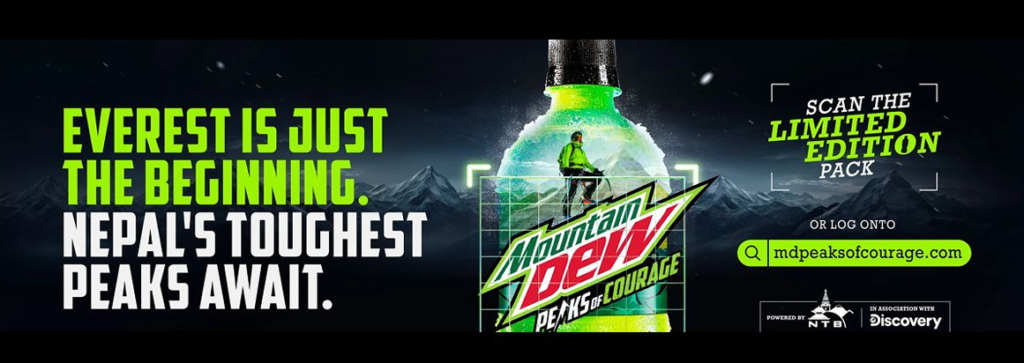
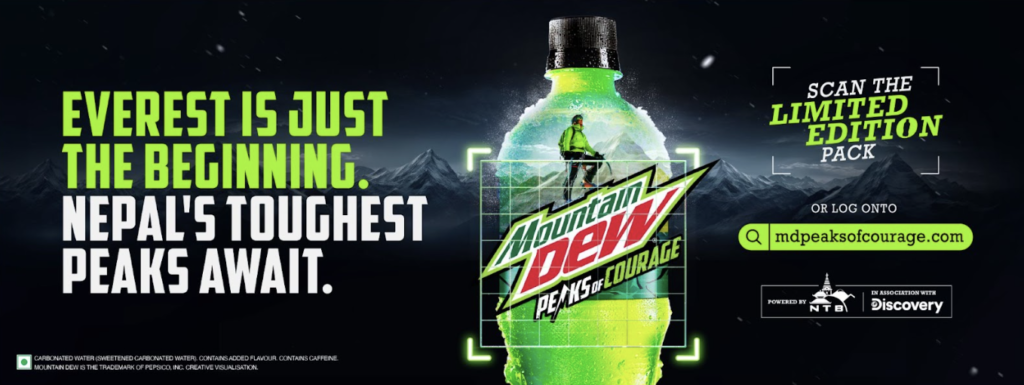
    When Mountain Dew set out to tell a deeper story about Nepal’s mountaineering heritage through the “Peaks of Courage” campaign in collaboration with Leo Burnett and in association with Discovery and the Nepal Tourism Board, the brand needed more than just a message, it needed a platform that could immerse, engage, and inspire users across devices and geographies. That’s where our team came in.


    The Vision and Purpose

    As the technical partners for this campaign, our role was to design and deploy a high-performance web platform that merged 3D visual storytelling with real-time AR capabilities. The result was mdpeaksofcourage.com — a dynamic, scalable, and immersive site that brought Nepal’s unexplored peaks directly to users’ hands.

    Why Immersive?

    At the heart of the “Peaks of Courage” campaign was a powerful brand message — challenge your fears. To make that message real, we needed more than words; we needed immersion. For a campaign rooted in the idea of challenging new fears, we knew the experience had to do more than just inform — it had to transport.

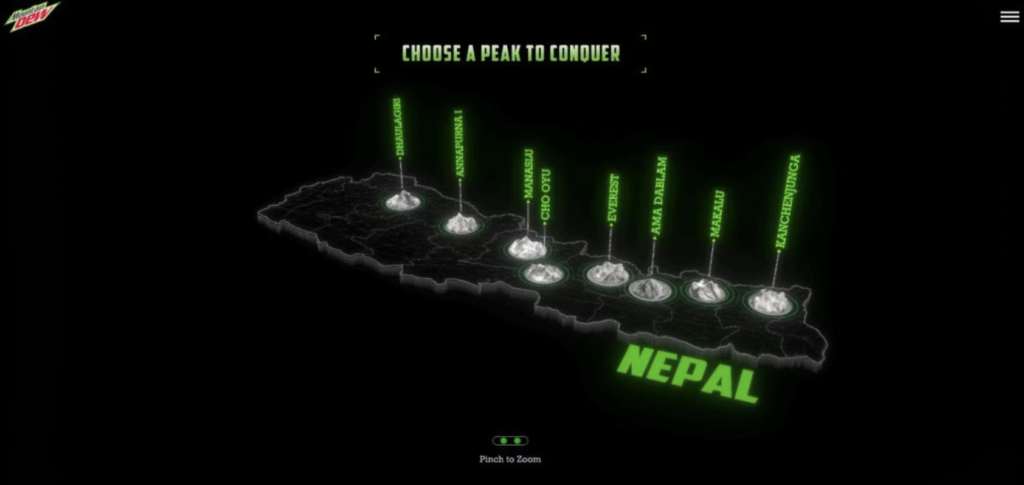
    By recreating the scale, altitude, and difficulty of Nepal’s toughest peaks through interactive 3D routemaps, we allowed users to experience the journey — its highs, risks, and resilience — from the safety of their homes.

    We paid special attention to the audio design, layering howling mountain winds, crunching snow, distant avalanches and more — all synced to where the user was on the 3D routemap. These immersive soundscapes weren’t just aesthetic; they were strategic. They created emotional texture, pulling users deeper into the climb and making the journey feel real, tangible, and alive.

    Our goal was to recreate the scale, drama, and atmosphere of Nepal’s legendary peaks from the comfort of a user’s home. That meant building more than a visual journey. It was a way to make fear tangible, and courage accessible, all through the browser.


    Campaign Objectives and Approach

    • Build a Scalable Immersive Web Platform for Mass Engagement
    • Make a site that works across browsers with zero app downloads
    • Deliver real-time 3D visualisations of Nepal’s 8K Peaks
    • Integrate AR to visualise the campaign while scanning the Mountain Dew Logo on Peaks of Courage Branded Bottles
    • Optimise for low bandwidth environments while retaining visual quality

    We architected a lightweight yet visually rich solution that leveraged modern web technologies to create an experience that was as educational as it was inspirational.


    Impact

    The Mountain Dew “Peaks of Courage” AR and 3D web experience revolutionized how users connect with adventure campaigns. By leveraging immersive technology, we transported people to the breathtaking mountains of Nepal without requiring them to leave their homes. This digital expedition allowed users to experience the majesty and challenges of these peaks in ways traditional media simply cannot replicate.


    1.5 Million

    Users Engaged across 7 Weeks

    64 Countries

    Global reach across six continents


    The campaign’s success demonstrated that immersive AR and 3D technologies aren’t just novel additions to marketing efforts—they’re powerful tools for creating meaningful connections. By blending digital innovation with authentic storytelling, we created an experience that resonated with audiences worldwide, allowing them to feel the spirit of adventure that Mountain Dew represents while gaining appreciation for Nepal’s iconic peaks.


    Key Features: Interactive 3D Map

    Peak Explorer in 3D: Users could rotate, zoom, and interact with an Interactive map of Nepal and explore mountaineering data through an interactive UI overlay

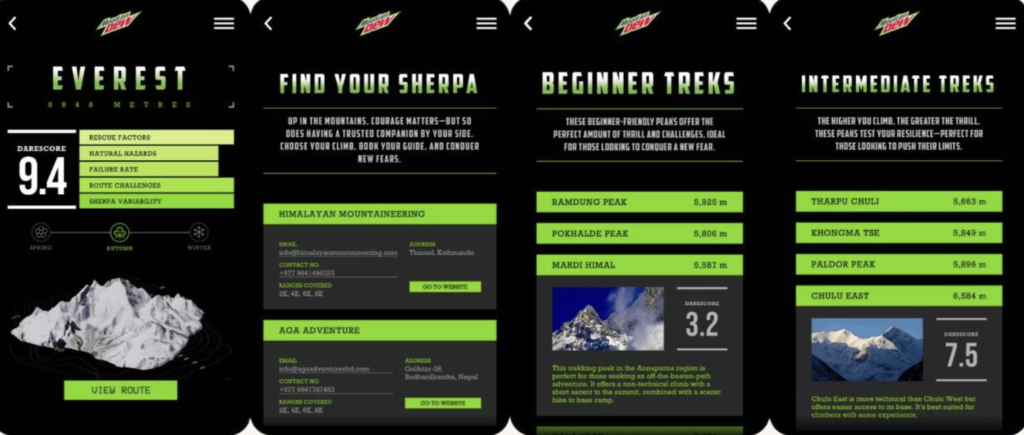
    Dare Score Parameters: We built a user interface to visually represent a peak’s challenge level — factoring in data such as Rescue Factors, Route Challenges and Sherpa Variability.

    Find Your Sherpa connects users with verified trekking agencies recommended by the Nepal Tourism Board. It’s a seamless way to turn inspiration into action by booking real treks with trusted local partners.

    Beginner & Intermediate Treks: To make Peaks of Courage more accessible, we added two curated sections: Beginner Treks and Intermediate Treks. The Beginner section highlights exciting routes for first-time adventurers, while Intermediate Treks offer a step up—designed for those ready to test their limits. This way, the experience empowers users to not just explore courage, but live it.


    Additional Features and Optimizations

    Web-Based AR Deployment

    With MindAR integration, users could launch Augmented Reality experiences from any mobile browser, showcasing the different 8K Peaks of Nepal visualised creatively.

    Optimised Asset Pipeline

    Heavy 3D models were decimated, LOD-optimized, and converted into GLTF files to reduce load time without compromising detail.

    Cross-Device Compatibility

    Cross device optimisation was used to ensure the best experience across different devices with varying resolutions and performance.

    Peak Hunter

    We created Peak Hunter—an interactive tool that recommends Nepal treks based on user inputs like fitness, skill, altitude, and season. It adds a personal touch, guiding each user to peaks that match their adventure goals.


    Designing the Climb: Evolving the User Interface

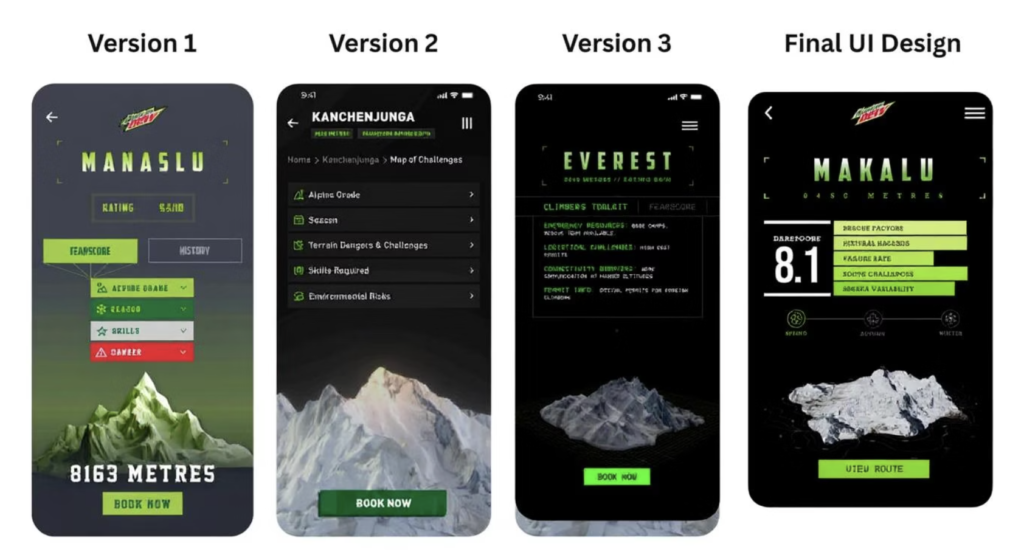
    UI isn’t built in a single pass — it’s shaped through layers of iteration, feedback, and refinement. For “Peaks of Courage,” we explored multiple visual directions to balance clarity with thrill.

    From information architecture and typography to interaction models and terrain rendering, every round brought us closer to an experience that felt both intuitive and powerful. Through this iterative journey, we arrived at a final design that merged rich data, immersive visuals, and seamless navigation — allowing users to explore Nepal’s mountains

    Bringing Routes to Life: The 3D Journey Behind the Maps

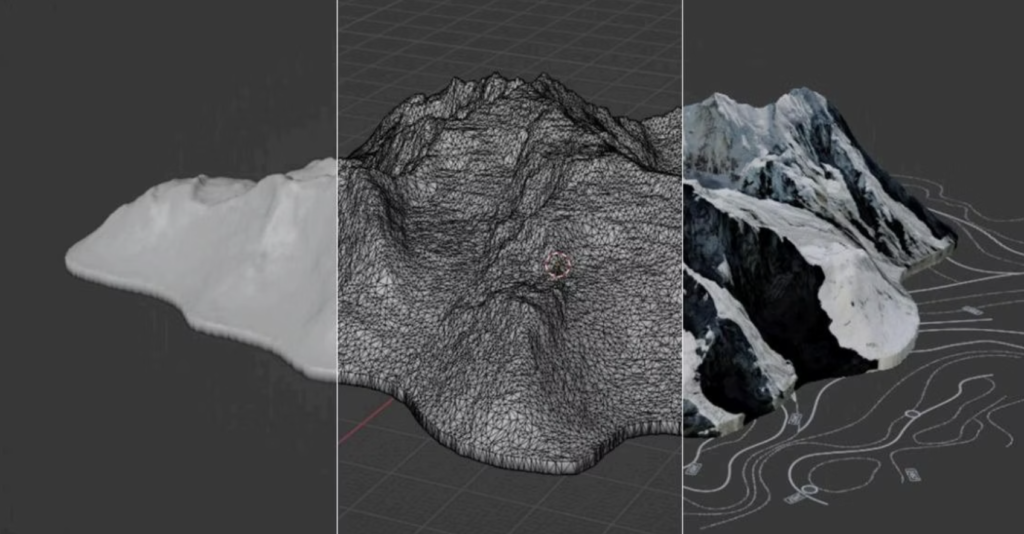
    Creating the interactive 3D routemaps was a meticulous process rooted in real-world data and storytelling. We began by extracting precise heightmap data to reconstruct the topography of each mountain in 3D. Using these elevation maps, we generated accurate digital terrains, layering high-resolution satellite textures to enhance realism and visual depth.

    But we didn’t stop at the surface. The actual climb routes were modeled using inputs from seasoned Sherpas — those who know every camp, crevasse, and challenge by heart. Their knowledge helped us shape the journey with authenticity, down to the most commonly used trails and the elevation markers that matter most.

    To make the experience truly immersive, we added interactive audio layers that respond to the user’s position along the route — incorporating ambient sounds and audio cues that evolve as you progress. The result is more than a map — it’s a climb you can feel, see, and hear


    Tech Stack

    Our engineering team carefully selected and integrated these technologies to create a seamless, immersive experience:

    • Three.js – For rendering high-fidelity 3D terrain and peak models interactively within the browser.
    • GLSL – For building custom shaders & materials for snow, particle animation, line animations in 3D.
    • MindAR – Image target based AR for scanning labels & augmenting models.
    • Vite – As a bundler for building the project.
    • GSAP & WebGL – For smooth animations and transitions between sections.
    • CDN and S3 – Based deployment for fast load times and asset delivery at scale.


    Want a share-first experience for your next event?

    We build crowd-pulling interactions that feel effortless on-ground and travel online through the content people create.

  • Liminal Rewind 2025

    2025 kept us busy – in a good way.

    We built experiences where technology showed up exactly when it was needed: to scale training, tell future-forward stories, and even help hundreds of fans take a birthday selfie with one actor.


    Peaks of Courage × Mountain Dew

    This was not just a brand experience. It was a movement. For Mountain Dew, we created an immersive storytelling journey that began with scanning a bottle and led all the way to the Himalayan peaks of Nepal. The idea was simple. Courage is not just about summits. It is about the people who make those journeys possible.

    Impact
    • $500K+ economic value for Sherpa communities
    • 20M+ global reach
    • 23% lift in purchase behaviour
    • Cannes Lions 2025 shortlist


    Vi at IMC | The Future in Motion

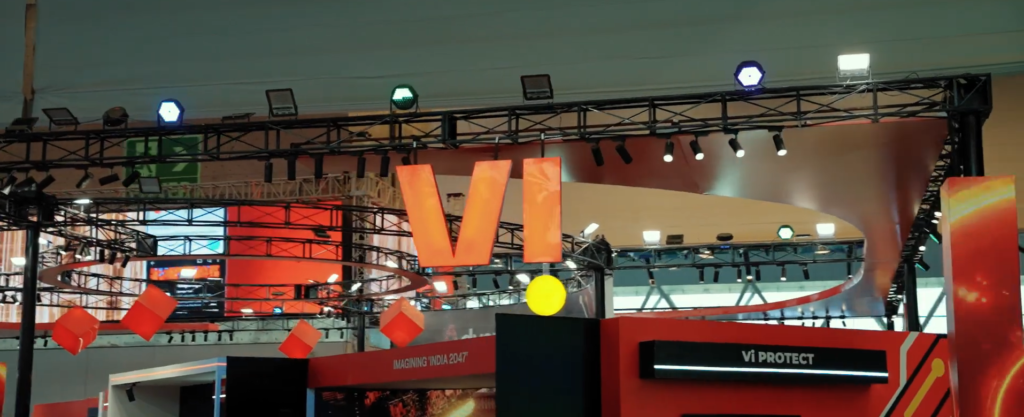
    ServiceXR – A mixed reality bike service training experience designed to make technical training scalable and cost effective. Users could learn servicing step by step, identify parts to replace, and practice procedures without relying on physical infrastructure.

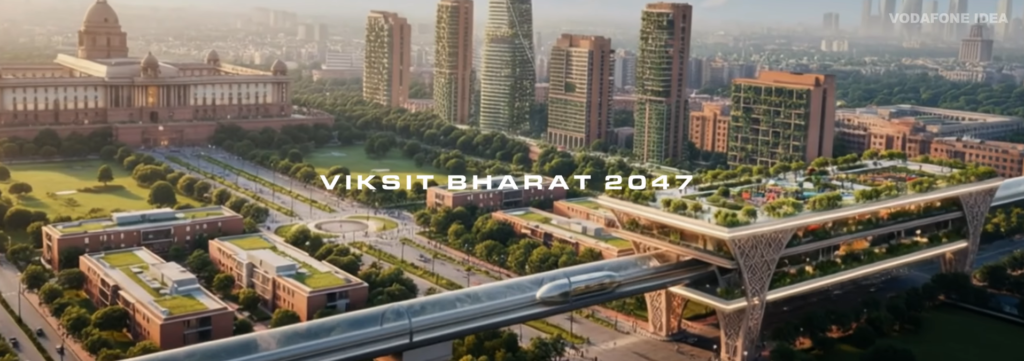
    Imagining India 2047 – An entirely AI powered film that imagined how connectivity will shape life as India moves toward 100 years of independence. The film showcased how Vi’s networks are transforming the digital landscape and enabling a more connected future.


    The Akshay Kumar Birthday Selfie Machine

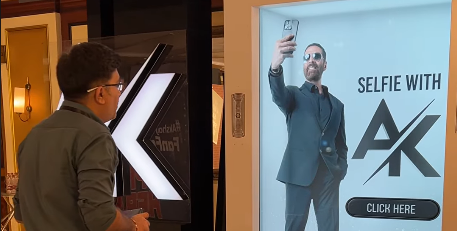
    Akshay Kumar invited hundreds of fans to celebrate his birthday. One problem: he could not click selfies with everyone. So we built a solution. Using an immersive Holobox setup, guests could line up, stand next to Akshay Kumar, and click a photo that felt completely real. Each selfie was instantly delivered via a QR code, ready to download and share. No waiting. No crowding. Just very happy guests.


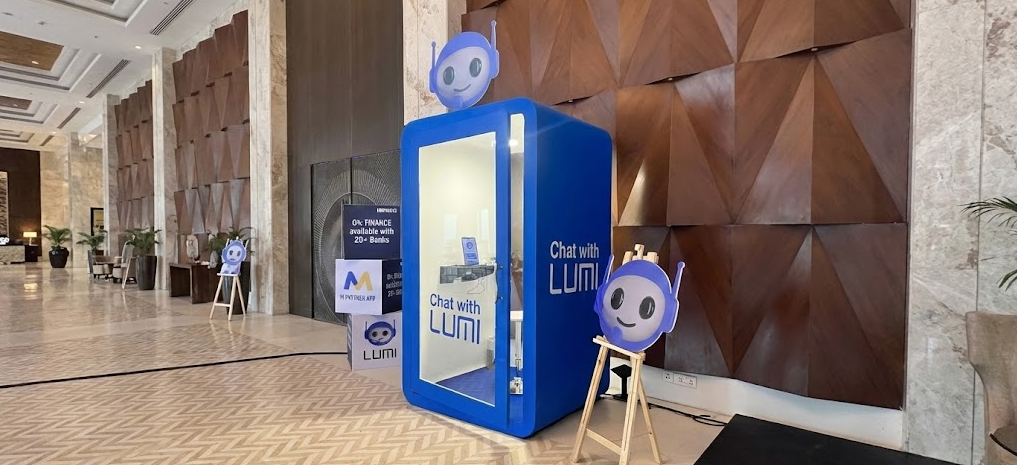
    Lumi – The Talking Brand

    We have all spoken to chatbots that sound like they were built by someone who has never spoken to a human. Lumi was our attempt to fix that. Designed as a conversational AI layer, Lumi could understand context, respond naturally, and guide users instead of overwhelming them.

    Less robotic. More human.


    2025 reminded us of something simple: when technology is done right, it disappears.

    What remains is the experience.

    Regards,
    Team Liminal


    Want a share-first experience for your next event?

    We build crowd-pulling interactions that feel effortless on-ground and travel online through the content people create.